Choosing the wrong open source AI agent framework costs enterprises 6-12 months of re-architecture. I have seen teams pick frameworks that work for prototypes. But later break under compliance, audit trails, or production scale.
The real question isn’t which is best? It’s about what fits our enterprise needs; security, compliance, scalability, and maintainability. We’ve shipped production agent systems with every framework on this list—LangGraph, CrewAI, Microsoft Agent Framework, and more across healthcare (HIPAA), logistics (EU customs), and financial services (SOC2). Why open source? Because enterprise AI teams need auditability, model flexibility, and extensibility for industry-specific workflows. That is accessible in open source solutions.
This guide is for CTOs, VPs of Engineering, and technical leaders making architecture and investment decisions. All nine open source frameworks for AI agent development are production-capable. The strategic decision should align with your compliance requirements, team skills, and roadmap. Let’s dive into the list of AI agent frameworks…
Best Open Source AI Agent Frameworks Comparison—What Do Enterprises Consider at Core?
| Factors | LangGraph | Mastra | CrewAI | Microsoft Agent Framework | OpenAI Agents SDK | Google ADK | SmolAgents | PydanticAI | Dify |
|---|---|---|---|---|---|---|---|---|---|
| Multi-Agent Orchestration | Hierarchical, supervisor patterns | Graph workflows, subgraphs | Role-based crews, hierarchical | Graph-based, concurrent, handoff | Handoffs, supervisor pattern | Task API, hierarchical tree | Single-agent, custom orchestration | Single-agent, type-hinted graphs | Visual builder, 40+ nodes |
| Deployment & Infrastructure | Self-hosted, managed $35/mo | Self-hosted, Cloud $250/mo | Self-hosted, AMP Enterprise | Self-hosted, Azure Foundry | Self-hosted only | Self-hosted, GCP $0.0864/vCPU-hr | Self-hosted, Docker/E2B | Self-hosted, durable execution | Self-hosted Docker, Cloud $59/mo |
| Maintainability | High, explicit graphs | High, TypeScript, Studio | Moderate, role-based | High, YAML definitions | High, minimal abstractions | High, CLI + web UI | High, ~1,000-line core | Excellent, type-safe models | Moderate, visual builder |
| Model Flexibility | 100+ via LangChain | 40+ with fallbacks | 100+ via LiteLLM | Azure OpenAI, OpenAI, Anthropic | 100+ via LiteLLM | Gemini, OpenAI, Anthropic | Transformers, Ollama, LiteLLM | 50+ providers | Multi-model routing |
| Human-in-the-Loop Workflows | First-class interrupt() |
Suspend-and-resume | AMP Enterprise approval gates | Graph interrupts, checkpoints | Guardrails, sessions | Task API checkpoints | Custom implementation | Durable execution, sessions | Workflow pauses, approval nodes |
| Agent Architecture | Graph-based, nodes/edges | Graph, composable workflows | Role-based, autonomous crews | Graph-based, middleware | Primitive-based, minimalist | Graph execution engine | CodeAgent, Python execution | Type-safe Pydantic models | Visual workflow builder |
| LLM Orchestration | Stateful, checkpoint-based | Durable, streaming | Sequential, hierarchical, flows | Stateful, checkpointing | Stateless, sessions | Stateful, Memory Bank | Stateless, no durable execution | Durable execution | Stateless, RAG pipeline |
| Agent Autonomy | Configurable, checkpoint approval | Configurable, guardrails | High, autonomous collaboration | Configurable, approval | Configurable, max_turns |
Configurable, approval | High, code execution | Configurable, validation layers | Configurable, tool-calling |
| Security & Scalability | Checkpoints, Docker/E2B | Region pinning, middleware | SOC2, SSO, RBAC (Enterprise) | Azure AD, Key Vault | Guardrails, infrastructure-dependent | IAM, Model Armor, Gateway | Critical: CVE-2026-10613 | Type safety, 90.5/100 security | Self-hosted control |
| Observability | LangSmith, OpenTelemetry | Studio, OpenTelemetry | LangSmith required | OpenTelemetry, Foundry | Built-in tracing | Session tracing, OpenTelemetry | Minimal | Logfire, OpenTelemetry | Built-in analytics |
| Governance Needs | LangSmith audit trails | Studio, Enterprise RBAC | AMP Enterprise governance | YAML, Azure AD RBAC | Guardrails, infrastructure | IAM, Gateway, Armor | Infrastructure-level | Type contracts, Logfire | Visual, infrastructure RBAC |
| Enterprise Integration | ServiceNow, Salesforce, APIs | MCP servers, n8n, Zapier | CRM, databases, Crew Studio | ServiceNow, AD, DevOps | Any API, LiteLLM | Vertex AI, Search, APIs | Python libraries | Any Python API | REST API, 100+ plugins |
Open Source AI Agent Frameworks That Actually Ship in Production
At Excellent Webworld, we’ve built production agent systems with the list of AI agent frameworks in the open source arena. Here’s all that my team and I have explored and learned about: where each open source AI agent framework works, where it breaks down, and when and how enterprises should choose the right one.
1. LangGraph
LangGraph is the graph-based runtime from the LangChain team. This treats agent workflows as directed graphs with explicit nodes, edges, and checkpointed state. Moreover, it’s the framework we reach for when a workflow has branching logic or human approval gates. Therefore, LangGraph resumes after failure without losing progress.
Language: Python, TypeScript (LangGraph.js)
Key Strengths:
- Durable execution with persistent checkpointing (PostgreSQL, Redis, and SQLite backends). So, agents survive restarts and API failures
- Human-in-the-loop interrupts with approval checkpoints baked into the graph
- Streaming support for real-time progress and partial outputs
- Multi-agent subgraph composition for complex team structures
- Native LangSmith integration for production tracing, evals, and dataset replay
When to Use:
- Complex, multi-step workflows with conditional branching, loops, or error recovery paths
- Long-running processes that must pause for human approval or even external events
- Teams already invested in LangChain who need to graduate from simple chains to stateful graphs
Custom or Self-Hosted: Yes – MIT-licensed, fully self-hostable on your own infrastructure
Pricing:
- LangSmith (optional observability): Free tier (5,000 traces/month); Plus from $39/seat/month with 10,000 base traces + usage-based fees; Enterprise custom pricing
- LangGraph Platform (managed hosting): From $35/month (optional)
Type of AI Agent: Multi-agent orchestration framework (supports single-agent and complex multi-agent systems)
Use Cases:
- Financial Services: Compliance workflows with mandatory human approval before irreversible actions
- Healthcare: Patient intake agents that pause for clinician review at specific decision points
- SaaS/Enterprise: Customer support escalation workflows with branching logic based on ticket severity
- E-commerce: Order fulfillment agents that handle exceptions, retries, and multi-carrier routing
Production Patterns We’ve Learned:
- Checkpoint at decision boundaries; we’ve seen this reduce database writes by 60% in high-throughput workflows
- Use LangSmith datasets to replay failed runs before deployment. So, this caught edge cases we would’ve discovered in production.
- For simple linear workflows, we’ve migrated teams from LangGraph to CrewAI or Pydantic AI. Hence, this reduces orchestration overhead.
- Design state schemas carefully; poorly structured state leads to checkpoint bloat and slow resumption times.
2. Mastra
Mastra is the TypeScript-first agent framework built by the Gatsby team, combining agents, graph workflows, RAG, memory, and evals in one cohesive package. Moreover, it’s our default choice for Next.js/Node teams. For those who want agents without maintaining a separate Python microservice.
Language: TypeScript (Node.js, Next.js, Vite, Express)
Key Strengths:
- Unified model routing across 40+ providers with built-in fallbacks
- Graph workflows with
.then(),.branch(), and.parallel()control flow - Built-in RAG pipelines with vector store integrations
- Interactive Studio for visual debugging, memory inspection, and eval runs
- MCP server authoring for exposing agents/tools to any compatible system
- Suspend-and-resume for human-in-the-loop steps
When to Use:
- Full-stack TypeScript teams building AI features into existing web applications
- Projects requiring RAG, memory, and workflows in a single package without stitching libraries together
- Teams wanting visual tooling (Studio) for non-engineers to inspect and test agents
Custom or Self-Hosted: Yes – Apache 2.0-licensed core, fully self-hostable
Pricing:
- Mastra Cloud (managed hosting + Studio): Free Starter tier, Teams at $250/month, Enterprise custom pricing
- Self-hosted: No vendor metering; pay only your infrastructure and model costs
Type of AI Agent: Multi-agent orchestration framework (supports single-agent, multi-agent, and workflow-based patterns)
Use Cases:
- SaaS Startups: AI-powered features embedded directly into Next.js applications (e.g., smart content generation and automated summarization)
- Marketing Tech: Campaign optimization agents that pull data from multiple APIs, analyze performance, and adjust bids
- Developer Tools: Code review agents integrated into CI/CD pipelines with GitHub/GitLab webhooks
- E-commerce: Product recommendation agents with real-time inventory checks and personalization
Production Patterns We’ve Learned:
- Define evals before writing agent logic; we’ve seen teams iterate 3x faster when success metrics are explicit from day one
- Use the Studio for non-engineer testing, as our PMs catch workflow issues before they reach QA
- Leverage MCP servers to expose agents to other tools in your stack (e.g., n8n, Zapier)
- Add explicit backoff logic when using
.parallel()on rate-limited APIs. My team has hit provider limits without it.
3. CrewAI
CrewAI is the role-based multi-agent framework that models collaboration as a “crew” where each agent has a distinct role, goal, and backstory. This AI agent framework is the fastest path from zero to a working multi-agent prototype. Accordingly, we’ve shipped CrewAI proofs-of-concept in under 50 lines of Python.
Language: Python
Key Strengths:
- Role-based agent definition with goals, backstory, and tool assignment
- Sequential and hierarchical process modes for task delegation
- Built-in memory backends (short-term, long-term, entity memory, contextual storage)
- CrewAI Flows for event-driven, conditional workflows around agent autonomy
- Large ecosystem of pre-built crew templates for common use cases
When to Use:
- Rapid prototyping of multi-agent systems where role-based collaboration is the core pattern
- Teams with mixed technical/non-technical stakeholders. Mostly, the role metaphor is easy to explain
- Workflows that are primarily sequential or hierarchical without complex branching
Custom or Self-Hosted: Yes – MIT-licensed, fully self-hostable
Pricing:
- CrewAI AMP (managed cloud): Free Basic tier (50 executions/month), Enterprise custom pricing (SOC2, SSO, dedicated VPCs)
- Self-hosted: No usage fees, pay only your infrastructure and model costs
Type of AI Agent: Multi-agent orchestration framework (specialized in role-based team collaboration)
Use Cases:
- Content Operations: Researcher → Writer → Editor → Reviewer pipelines for automated report generation
- Sales/RevOps: Lead qualification crews that research prospects, draft outreach, and validate outputs
- Legal/Compliance: Document review teams where agents specialize in different sections (e.g., clauses, citations, risk flags)
- Market Research: Competitive analysis crews that scrape, synthesize, and summarize industry trends
Production Patterns We’ve Learned:
- Define clear role boundaries and handoff rules. Moreover, ambiguous roles lead to unpredictable delegation chains
- Wrap agent autonomy in Flows for deterministic business logic in production workflows
- Integrate LangSmith from day one; debugging multi-agent runs without tracing is painful
- Migrate to LangGraph when workflows need complex branching or loops. Therefore, the CrewAI lacks native support for these patterns.
4. Microsoft Agent Framework
Microsoft Agent Framework (MAF) is the consolidated successor to AutoGen and Semantic Kernel, combining multi-agent orchestration with enterprise and AI integrations. Hence, this open-source AI agents’ framework is suggested for .NET shops and Azure-centric teams. Because it’s where Microsoft’s agent investment is going.
Language: Python, .NET/C#
Key Strengths:
- Graph-based workflows (sequential, concurrent, handoff, group collaboration)
- Middleware system for custom processing, logging, and authorization
- YAML-based declarative agent definitions for non-code configuration
- First-class .NET/C# support with Azure integration (Azure OpenAI, Azure Functions, etc.)
- OpenTelemetry tracing built-in, deployable to Microsoft Foundry for hosted execution
- Official migration guides from AutoGen and Semantic Kernel
When to Use:
- Enterprises standardized on Microsoft Azure with Azure OpenAI Service
- .NET teams needing first-class C# support for agent development
- Organizations migrating from AutoGen or Semantic Kernel to a supported, actively developed open source AI agent framework
Custom or Self-Hosted: Yes – open-source, self-hostable on any infrastructure
Pricing:
- Microsoft Foundry (managed hosting): Usage-based pricing via Azure (compute, memory, session storage)
- Self-hosted: No framework fees; pay only Azure/model costs
Type of AI Agent: Multi-agent orchestration framework (supports single-agent, multi-agent, and enterprise workflow patterns)
Use Cases:
- Enterprise IT: Internal helpdesk agents integrated with ServiceNow, Active Directory, and Azure DevOps
- Financial Services: Compliance agents that query internal databases, cross-reference access logs, and generate audit reports
- Healthcare: Patient scheduling agents integrated with Epic/Cerner via Azure APIs
- Manufacturing: Supply chain optimization agents that coordinate with ERP systems and logistics providers
Production Patterns We’ve Learned:
- Use YAML-based agent definitions for non-engineer stakeholders to configure and modify agents
- Leverage the middleware system for centralized logging, authorization, and rate limiting
- Migrate from AutoGen early; we’ve moved financial services clients in 3 weeks using official guides, saving them from maintaining deprecated code.
- Don’t start new projects on AutoGen. Thus, it’s in maintenance mode, and Microsoft recommends MAF for all new work.
5. OpenAI Agents SDK
The OpenAI Agents SDK packages OpenAI’s agent patterns into a small set of primitives: agents, handoffs, guardrails, and sessions. This open source AI agent framework is used when teams are already deep in the OpenAI stack and want official, minimal abstractions. Basically, it’s for multi-agent workflows.
Language: Python (JavaScript/TypeScript version separate)
Key Strengths:
- Handoffs for structured task delegation between agents
- Guardrails for input/output validation layers
- Sessions that manage conversation history automatically
- Built-in tracing and real-time voice agents
- Provider-agnostic via LiteLLM (supports 100+ non-OpenAI models)
- Configurable
max_turnsfor controlling agent execution depth
When to Use:
- Teams already using OpenAI’s API who want official agent primitives without heavy orchestration overhead
- Projects requiring handoffs between specialized agents (e.g., triage → research → drafting)
- Voice agent applications with real-time streaming requirements
Custom or Self-Hosted: Yes – open-source, self-hostable
Pricing:
- Model costs: Billed at OpenAI’s token rates (or your chosen provider via LiteLLM)
- No additional framework fees – pay only for model inference and your infrastructure
Type of AI Agent: Multi-agent orchestration framework (supports single-agent and multi-agent patterns with handoffs)
Use Cases:
- Customer Support: Triage agents that route tickets to specialized handlers based on issue type
- Research: Literature review agents that delegate search, summarization, and citation tasks
- Code Generation: Planner → coder → reviewer workflows for automated feature development
- Voice Assistants: Real-time conversational agents with tool-calling and context management
Production Patterns We’ve Learned:
- Use guardrails to validate inputs and outputs. So, this prevents agents from acting on malformed data
- Set
max_turnsexplicitly to avoid runaway agents in production - Leverage LiteLLM integration to swap models without rewriting agent logic. Moreover, we’ve used this to reduce costs by 40%
- Keep handoffs simple; if one agent can do the task, don’t over-engineer with multiple agents.
6. Google Agent Development Kit (ADK)
Google ADK is Google’s open-source, code-first framework for developing, evaluating, and deploying AI agent architecture. Additionally, now on 2.x with a graph-based execution engine, it’s the AI agent framework we recommend for teams in the Google Cloud ecosystem. Usually, those who need native Gemini support and multi-agent orchestration.
Language: Python, TypeScript, Go, Java, Kotlin
Key Strengths:
- Workflow runtime (graph-based execution engine with routing, loops, retry logic)
- Task API for structured agent-to-agent delegation with multi-turn and human-in-the-loop support
- Native Gemini integration with multi-provider flexibility (OpenAI, Anthropic, etc.)
- Interactive CLI and web UI for local testing
- Session management and runner abstractions for boilerplate reduction
- Agent2Agent (A2A) protocol for cross-framework interoperability
When to Use:
- Teams in Google Cloud ecosystem with Vertex AI, Gemini, or Google Search grounding
- Multi-agent systems requiring structured delegation and human-in-the-loop checkpoints
- Polyglot teams needing SDKs in Python, TypeScript, Go, Java, or Kotlin
Custom or Self-Hosted: Yes – Apache 2.0-licensed, fully self-hostable
Pricing:
- Framework: Free (Apache 2.0 open-source)
- Agent Runtime (managed, Google Cloud): $0.0864/vCPU-hour + $0.0090/GB-hour, free tier (50 vCPU-hours + 100 GB-hours/month), session storage at $0.25 per 1,000 events
- Self-hosted: No framework fees, pay only your model provider and infrastructure
Type of AI Agent: Multi-agent orchestration framework (supports single-agent, multi-agent, and workflow-based patterns)
Use Cases:
- Enterprise Search: Internal knowledge base agents with Gemini-native retrieval and citation grounding
- Customer Support: Multi-agent support teams with escalation paths and human approval gates
- E-commerce: Product recommendation agents with Google Search grounding and real-time inventory checks
- Healthcare: Clinical decision support agents that query medical databases and provide evidence-based recommendations
Production Patterns We’ve Learned:
- Use the Task API for structured delegation. Thus, it handles multi-turn conversations and context passing automatically
- Leverage the web UI for local testing before deploying to production
- Implement the A2A protocol if you need cross-framework interoperability. Well, it’s a key differentiator
- Don’t assume Gemini is mandatory; ADK supports OpenAI, Anthropic, and local models via LiteLLM
7. SmolAgents
SmolAgents is Hugging Face’s minimalist, code-first agent framework where agents write and execute Python code directly instead of JSON tool calls. With a ~1,000-line core, it’s the framework my team uses for lightweight automation tasks and research prototypes. So, it is highly efficient where transparency matters.
Language: Python
Key Strengths:
- Minimalist core (~1,000 lines of code) for easy auditing and extension
- CodeAgent pattern where agents write and execute Python code for tool interaction
- Model-agnostic (local Transformers, Ollama, 100+ providers via LiteLLM)
- Sandboxed execution via E2B, Modal, or Docker
- Dynamic model orchestration across Hugging Face ecosystem
- Fine-tuning support for industry-specific optimization
When to Use:
- Quick automation tasks without orchestration complexity
- Research institutions and startups wanting auditable, lightweight agents
- Teams prioritizing simplicity and transparency over enterprise features
Custom or Self-Hosted: Yes – open-source, fully self-hostable
Pricing:
- Hugging Face Pro (optional): $9/month for individuals, Team from $20/user/month, Enterprise from $50/user/month
- Self-hosted: No framework fees, pay only your model provider and infrastructure
Type of AI Agent: Single-agent framework (can be extended to multi-agent with custom orchestration)
Use Cases:
- Research: Experimental agents for academic papers where code transparency is required
- Startups: Rapid prototyping of automation workflows (e.g., data scraping, report generation)
- E-commerce: Product listing agents that generate descriptions, optimize SEO, and update inventory
- Healthcare: Clinical note summarization agents that extract key findings from patient records
Production Patterns We’ve Learned:
- Checkpoint at decision boundaries. We’ve even seen this reduce database writes by 60% in high-throughput workflows.
- Use LangSmith datasets to replay failed runs before deployment. Moreover, this caught edge cases we would’ve discovered in production.
- For simple linear workflows, we’ve migrated teams from LangGraph to CrewAI or Pydantic AI to reduce orchestration overhead.
- Design state schemas carefully; poorly structured state leads to checkpoint bloat and slow resumption times.
8. PydanticAI
PydanticAI brings Pydantic’s type safety and ergonomic developer experience to agent development. It’s the framework we usually prefer for when Python teams prioritize testability, structured outputs, and minimal boilerplate. This works well without heavy orchestration overhead.
Language: Python
Key Strengths:
- Type-safe agent definitions with Pydantic models for inputs, tools, and outputs
- Validation-first agent loop that moves errors from runtime to write-time
- Durable execution (agents preserve progress across API failures and restarts)
- Type-hint-driven graph system for workflow orchestration
- OpenTelemetry instrumentation built-in
- Support for 50+ model providers (OpenAI, Anthropic, Gemini, DeepSeek, Grok, Cohere, Mistral)
When to Use:
- Python teams prioritizing type safety, testability, and structured outputs
- Single-agent or small multi-agent systems embedded in Python services
- Projects requiring durable execution without heavy orchestration overhead
Custom or Self-Hosted: Yes – MIT-licensed, fully self-hostable
Pricing:
- Pydantic Logfire (optional observability): Free Personal tier, Team at $49/month, Growth at $249/month, Enterprise custom pricing
- Self-hosted: No framework fees, pay only your model provider and infrastructure
Type of AI Agent: Single-agent framework (can be extended to multi-agent with custom orchestration)
Use Cases:
- FinTech: Structured data extraction agents that validate outputs against Pydantic schemas
- SaaS: API integration agents that enforce strict input/output contracts
- Healthcare: Clinical data normalization agents with validation against medical ontologies
- E-commerce: Product catalog agents that validate and enrich product data before ingestion
Production Patterns We’ve Learned:
- Define Pydantic models for all agent inputs, tools, and outputs—this catches errors early and improves testability
- Use Logfire for observability; it’s native to Pydantic and provides detailed traces without extra setup
- Don’t over-engineer simple agents, as PydanticAI shines when you need type safety
- Enable durable execution – we’ve seen this prevent data loss during API failures in production
9. Dify
Dify is a full LLM application platform combining a visual workflow builder, RAG pipeline, agent capabilities, and API layer. This is in one self-hosted stack. However, it’s the open-source AI agent framework that we personally recommend for startups and mid-market companies. The ones that want a platform-in-a-box without building everything from scratch to save cost and effort.
Language: Python, TypeScript (self-hosted platform with visual builder)
Key Strengths:
- Visual workflow builder with 40+ built-in nodes (LLM, retrieval, code, HTTP request, etc.)
- Built-in RAG pipeline with chunking, embedding, and retrieval configuration
- Multi-model routing (run different models for different tasks within a single workflow)
- REST API and webhook output for every application
- Agent mode with tool-calling and iterative reasoning
- 100+ plugin integrations (growing rapidly)
When to Use:
- Startups building AI-powered SaaS features, so they need a full platform
- Operations teams wanting a visual builder rather than writing Python for every workflow
- Companies evaluating SaaS MVP development solutions who need a rapid AI backend without building from scratch
Custom or Self-Hosted: Yes – Apache 2.0-licensed, fully self-hostable via Docker Compose
Pricing:
- Dify Cloud: Free tier (200 message credits/month), paid plans from $59/month, Enterprise custom pricing
- Self-hosted: No framework fees, pay only your infrastructure and model costs
Type of AI Agent: Multi-agent orchestration platform (supports single-agent, multi-agent, and RAG-based workflows)
Use Cases:
- Customer Support: Chatbots with document retrieval, multi-step workflows, and API
- SaaS Startups: AI-powered features (e.g., smart content generation, automated summarization) with minimal engineering
- Operations: Workflow automation for lead qualification, report generation, and data
- E-commerce: Product recommendation agents with RAG-based knowledge bases and multi-model
Production Patterns We’ve Learned:
- Use the visual builder for rapid prototyping; it’s the fastest path from idea to testable agent
- Configure RAG at the chunking and retrieval level for document-heavy use cases
- Export to Python and refactor for production; we’ve seen visual workflows become unmaintainable at scale
- Allocate ~4 GB RAM baseline for self-hosted deployments, more if running local embedding models
Now, the decision on choosing the right open source AI agent framework is more navigational, with use cases and our production takeaways.
Our Real-World Implementations: Where We’ve Deployed These Frameworks
At Excellent Webworld, my team has been well-versed in AI frameworks and LLM orchestration solutions. We have delivered attractive projects; a few of the best ones that we have worked on using the open-source AI agent framework are given below.
1. AI Virtual Health Assistant
Frameworks Used:
- LangGraph – stateful patient workflows
- Google ADK – HIPAA-compliant orchestration
- PydanticAI – EHR data validation
What We Built: Multi-agent system for symptom tracking, Appointment scheduling, EHR interoperability, and Doctor collaboration
Results:
- 90% EHR data standardization
- 70% reduction in diagnostic inaccuracies
- 50% TCO reduction
Why It Matters: Demonstrates how LangGraph’s checkpointing and Google ADK’s Agent Identity enable compliant, auditable healthcare agents.
2. AI Freight Forwarding Platform
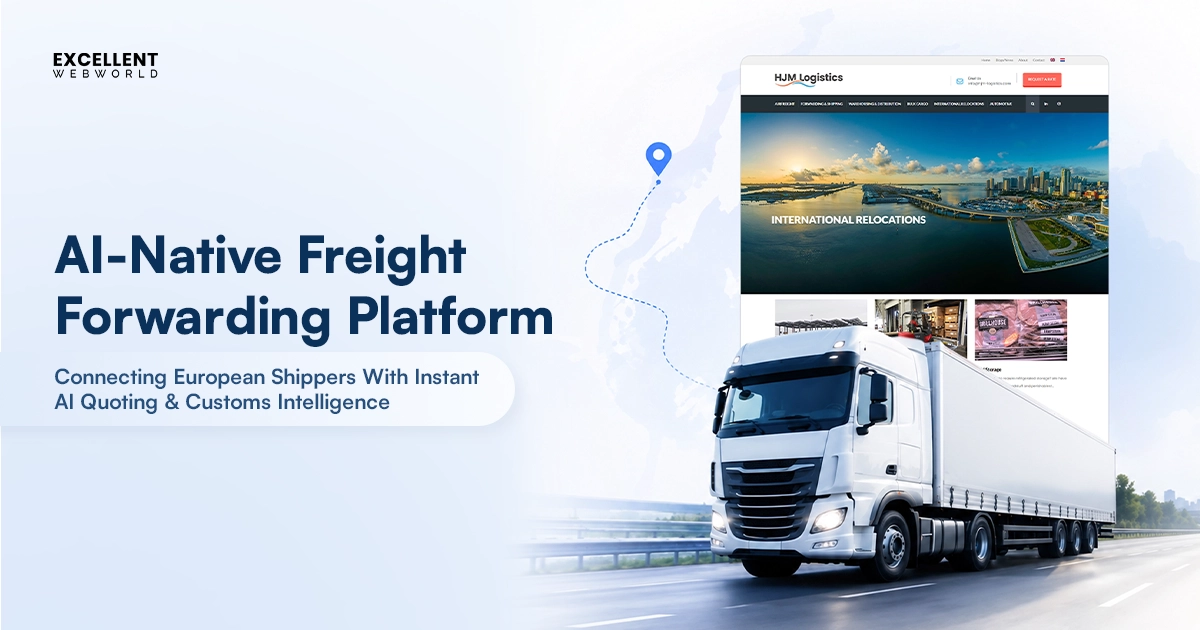 Frameworks Used:
- LangGraph – Auditable quote workflows
- Microsoft Agent Framework – EU customs compliance
- Dify – Document RAG
What We Built:
- Four production AI workloads: rate engine, document intelligence, predictive ETA, and HS code classification with full audit trails
Results:
- 90% faster quoting
- 85% less manual data entry
- 100% auditable AI decisions
Why It Matters: Shows how Microsoft Agent Framework’s YAML governance and LangGraph’s observability enable explainable AI in regulated industries.
3. Conversational AI Language Learning Platform
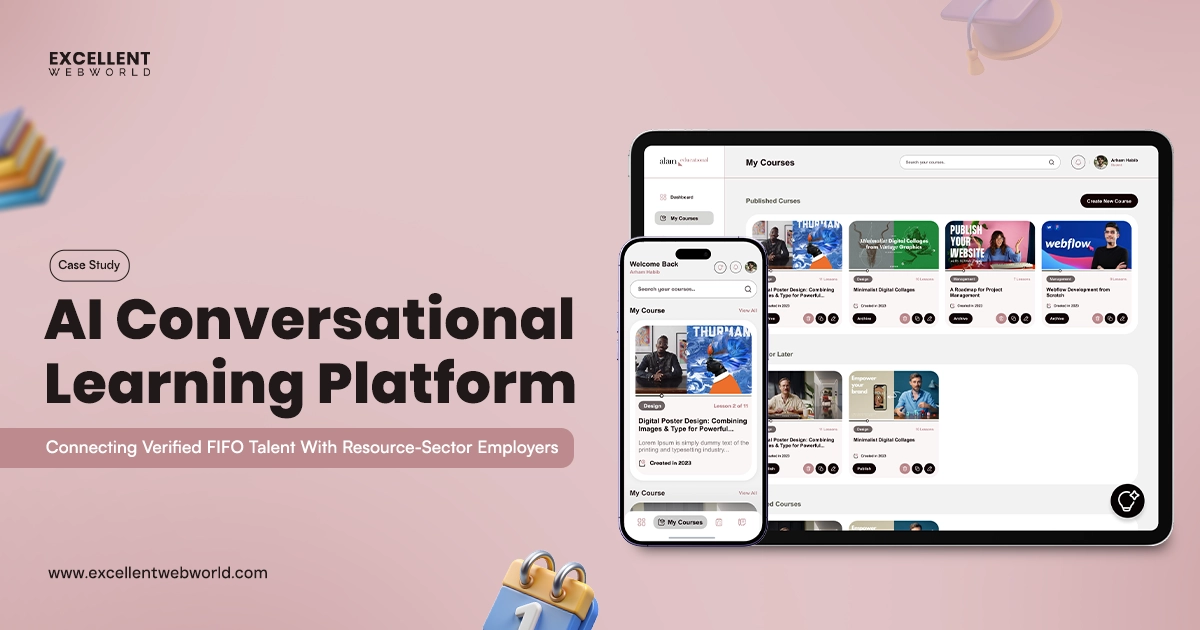
Frameworks Used:
- CrewAI – Scenario-based agents
- PydanticAI – Adaptive proficiency
- Mastra – Multi-provider translation
What We Built: Adaptive conversational engine across 7 domains with real-time proficiency calibration and French/Spanish translation
Results:
- 45% higher enrollment
- 2.3× daily practice sessions
- 41% higher course completion
Why It Matters: Demonstrates how CrewAI’s role-based pattern and PydanticAI’s type safety enable personalized, adaptive learning agents.
Frequently Asked Questions

Article By

