Then, you’re at the right place.
Ever wonder why some startups skyrocket while others crash and burn? The numbers tell a shocking story: an incredible 305 million startups launch annually. (Source: Moyank) And yet, up to 90% will fail. After that exciting first year, a brutal 70% collapse occurred between years two and five in their software development journey for startups. (Source: Startup Genome)
Why such carnage? The culprits are clear: 34% miss product-market fit, 22% mess up their marketing, and 18% crumble from team problems. (Source: Exploding Topics) These aren’t just statistics—they’re warnings for anyone creating digital products in today’s competitive landscape.
The startup world is simultaneously booming and brutal. That’s why having the right startup software development partner isn’t just helpful—it’s the need of the hour.
Over the past 13+ years, we’ve guided countless founders to success with cutting-edge software solutions. We’ve distilled those lessons into this guide, giving you the wisdom to beat the odds and help your venture thrive where others fail.
The Startup Software Development Process
For startups, the journey from concept to launch is rarely a linear process. Your software development process requires a structured approach while maintaining the agility to pivot when necessary.
This roadmap will guide you through each critical phase, helping you build a digital product that resonates with your target market.
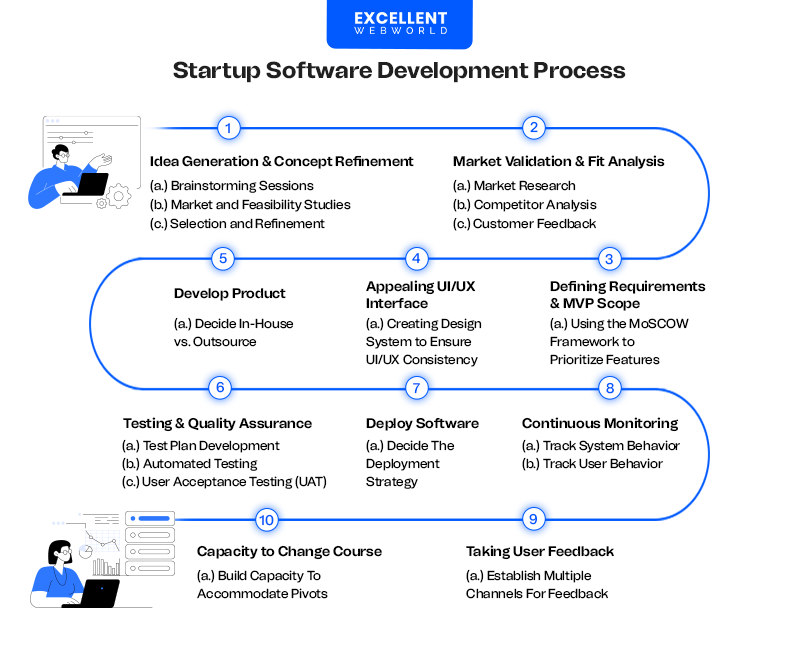
1. Idea Generation & Concept Refinement
Every successful startup begins with a clear, well-refined concept. This phase transforms your raw idea into a structured vision through methodical exploration and validation.
(a.) Brainstorming Sessions
As a founder, you must schedule regular sessions with your core team, using techniques like:
When working with a custom software development company for startups, involve them in later-stage brainstorming sessions. Their technical perspective can help refine concepts into feasible products.
(b.) Market and Feasibility Studies
Before investing significant resources, validate whether your concept addresses a genuine market need. Conduct both desk research and field studies.
Key areas to investigate include:
Feasibility studies should cover technical, operational, and financial perspectives. This analysis helps assess whether your idea can become viable without depleting your runway.
(c.) Selection and Refinement
After exploring multiple concepts, it’s time to narrow your focus. Create a scoring matrix that weighs elements like market potential, technical complexity, and alignment with your vision.
Once you’ve selected your top idea, refine it via rapid prototyping. Paper sketches, wireframes, or clickable mockups can validate assumptions without significant development.
2. Market Validation & Fit Analysis
A brilliant idea needs market demand to succeed. Before committing significant resources, validate that your solution addresses real customer needs worth solving.
(a.) Market Research
Dig deeper into your target market with quantitative and qualitative studies—survey potential customers about their pain points, current solutions, and willingness to pay.
Leverage analytics tools to understand industry trends and search patterns. These insights help position your product effectively and identify promising customer segments.
(b.) Competitor Analysis
For each competitor, analyze:
This analysis reveals market gaps your software solutions can fill while helping you anticipate competitive responses.
(c.) Customer Feedback
Create feedback channels early. Conduct interviews with potential users to test your concept before writing code.
Building a small but engaged community of early adopters provides ongoing feedback throughout development. These relationships become invaluable when launching your beta version.
3. Defining Requirements & MVP Scope
Consider using the MoSCoW prioritization framework to define your MVP scope:
This framework lets you stay focused while building an MVP and clarifies what all stakeholders should expect in the preliminary release.
4. Appealing UI/UX Interface
Your interface is where users experience your product. Invest in expert design that balances aesthetics with usability.
Create a design system that guarantees consistency throughout your application:
Test your interface designs with real users before development begins.
5. Develop Product
With precise requirements and designs, development can proceed efficiently. The critical choice is whether to build in-house or outsource development.
When hiring developers for a startup, look beyond technical abilities to find professionals who understand the startup environment.
Many founders discover that outsourcing software development services for startups gives the proper balance of expertise and flexibility in preliminary phases, particularly when combined with a small in-house technical team for oversight.
6. Testing & Quality Assurance
(a.) Test Plan Development
Create a comprehensive testing strategy that begins with unit testing and extends through integration, system, and acceptance testing. Document edge cases and establish quality gates that must be passed before features move to production.
(b.) Automated Testing
Build automation into your testing process from the beginning. While it requires upfront investment, automated testing accelerates development cycles and reduces bugs.
Implement continuous integration tools that run tests automatically with each code commit. The best software development company for your startup will emphasize test automation as a productivity multiplier.
(c.) User Acceptance Testing (UAT)
Before full release, conduct structured UAT with representative users. Provide explicit scenarios and capture both qualitative feedback and quantitative metrics. This final validation step often reveals subtle usability issues that weren’t apparent initially.
7. Deploy the Software
Plan your deployment strategy based on your user acquisition approach. Options include:
8. Continuous Monitoring
Implement analytics that track both technical performance and user behavior. Technical monitoring should cover server health, response times, and error rates.
User analytics should track the following:
Create dashboards that provide visibility into these metrics for all stakeholders.
9. Taking User Feedback
Establish multiple channels for user feedback:
Create a process for categorizing, prioritizing, and routing feedback to appropriate teams.
10. Capacity to Change Course
Build flexibility into your development process to accommodate pivots when market feedback demands it. This agility is a startup’s most significant advantage.
When data supports such changes, be prepared to make difficult decisions about removing features or making significant redirections. Software development solutions evolve through continuous adaptation, rather than rigid adherence to initial plans.
Now that we have understood the startup software development phases, it is equally crucial to recognize the broader factors that affect success. Let’s examine them in the next section.
Key Considerations for Startup Founders
As a founder, navigating software development requires strategic questioning and knowledgeable decision-making. Your tech choices will significantly impact your startup’s capability to innovate, scale, and succeed.
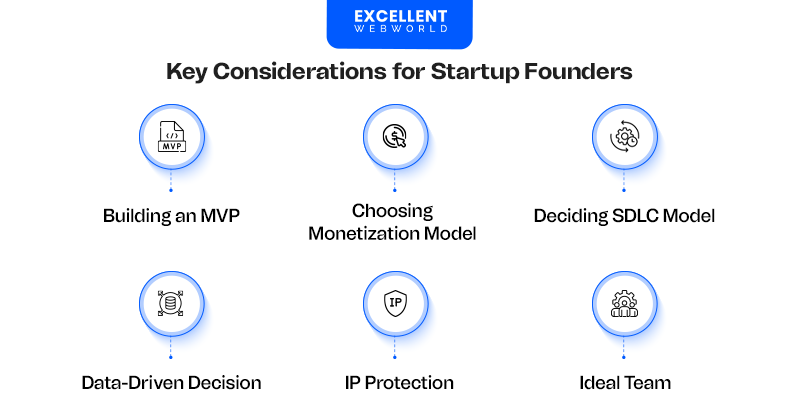
1. Minimum Viable Product (MVP)
When launching your startup, build an MVP application that addresses the core user issues without pointless functions.
This approach allows you to:
A top software company will tell you to begin with streamlined MVPs before evolving into comprehensive platforms.
2. Monetization Models & Revenue Strategies
Selecting the correct revenue model is essential for sustainability. Based on your product type and target market characteristics, consider these options.
| Model | Description | Best For |
|---|---|---|
| In-app Purchases | Users buy digital goods within your application | Games, productivity tools |
| Paid Subscription | Recurring payment for continued access | SaaS products, content services |
| Sponsorship | Third-party brands pay to reach your audience | Content platforms, communities |
| Freemium Model | Basic features are free; premium features are paid | Productivity tools, B2C apps |
| Advertising | Revenue from displaying ads to users | Content platforms, free tools |
3. Choosing the Right SDLC Model
Your development methodology should align with your team size, technical complexity, and market uncertainty. Custom development often benefits from flexible approaches, allowing startups to fully capitalize on the benefits of custom software development.
| Model | Characteristics | Pros | Cons |
|---|---|---|---|
| Agile | Iterative development, flexible to change | Adapts to market conditions | A lack of structure for inexperienced teams |
| Lean | Eliminates waste, focuses on customer value | Maximizes limited resources | Requires disciplined prioritization |
| Scrum | Fixed sprint cycles, defined roles | Clear process structure | Administrative overhead |
| Kanban | Visual workflow, continuous delivery | Simple to implement | May lack timeboxing discipline |
| DevOps | Integration of development and operations | Streamlined deployment | Requires technical maturity |
| Incremental | System developed in increments | Early partial functionality | Integration challenges |
| Waterfall | Sequential phases | Clear milestones | Inflexible to change |
4. Data-Driven Decision Making
Using data to guide development eliminates the guesswork. Implement these practices from day one:
5. Intellectual Property Protection
Protect your innovation assets early to prevent costly disputes and secure investor confidence.
Essential Intellectual Property (IP) safeguards include:
6. Ideal Team & Roles
Building the right team is crucial for delivering quality app development solutions.
Your core startup team should include the following:
Consider utilizing AI-powered digital product design to development to enhance your team’s capabilities when working with a custom software development company for startups.
With a clear understanding of the critical concerns of startup founders, the next essential step is evaluating the financial investment required to bring your product to market. Let’s explore the software development costs startups should plan for.
Software Development Cost For Startups
Depending on the complexity, features, and development process, startup software development charges typically range from USD 50,000 to USD 250,000. If you hire developers hourly, the charges usually range from USD 50 to USD 250.
Factors That Influence Cost
When you thoroughly understand these factors, your software project estimation will be more accurate. Many founders underestimate costs when planning their custom-built software solutions, which can lead to financial overruns.
Typical Cost Ranges by Project Type
The following table shows average costs based on data from Clutch and GoodFirms. These ranges can help guide your budgeting process when seeking end-to-end software development services.
| Project Type | Cost Range (USD) | Timeline |
|---|---|---|
| MVP/Prototype | 15,000-50,000 | 2-4 months |
| Basic Web Application | 50,000-120,000 | 3-6 months |
| eCommerce Application | 60,000-200,000 | 4-8 months |
| Mobile Application | 40,000-150,000 | 3-6 months |
| Enterprise Solution | 50,000-500,000+ | 8-12 months |
Many startups find it economical to outsource software development for startups. It helps them to manage these costs while maintaining quality deliverables.
Hidden Costs to Watch
Being aware of these often-overlooked expenses will help you partner more effectively with software development companies for startups and avoid unpleasant budget surprises.
| Cost Category | Decision | Impact |
|---|---|---|
| Maintenance | Ongoing bug fixes and updates | 15-20% of the initial cost annually |
| Scaling | Infrastructure costs as the user base grows | Variable based on growth |
| Feature Additions | Post-launch enhancements | 10-30% of initial development |
| Security Updates | Critical patches and compliance | Often overlooked but essential |
The key is balancing cost with quality—cutting corners initially leads to higher prices later. Outsourcing software development for startups to regions with competitive prices can offer savings while delivering outstanding results.
Now that you better grasp the software development costs involved, it’s time to consider how to build your team.
Startup Software Development Models & Hiring Options
Choosing the right development approach and team composition is critical for startup success. Your early technology decisions will shape product development velocity, budget allocation, and market position.
Development Models
In-house vs Outsourcing: Building your team gives you more control, but requires more time and resources. Outsourcing to external partners can accelerate custom software development and provide specialized expertise.
Dedicated Team vs IT Staff Augmentation: A dedicated team model provides a team focused solely on your project. Staff augmentation expands your existing team with specialized roles, enabling you to scale capabilities without incurring full-time hiring commitments.
Managed Services: This approach provides startups with a fully delegated software development process, including professional oversight and reporting. It works best when you have limited technical leadership or prefer to focus primarily on business decisions.
Hiring Developers
When building your technical team, understanding the different specializations and when to bring them on board can significantly impact your development journey.
The right mix of talent ensures efficient software product development services for startups while controlling costs and technical debt.
| Developer Type | Responsibilities | When to Hire |
|---|---|---|
| Front-End Developers | User interfaces, client-side logic, and responsive design | When creating user-facing apps with complex interactions |
| Mobile App Developers | Native or cross-platform development for mobile platforms | When mobile presence is core to your business model |
| Back-End Developers | Server architecture, databases, APIs, business logic | When building data-intensive apps requiring robust infrastructure |
| Full Stack Developers | End-to-end implementation across front-end and back-end | Early-stage startups need versatile, cost-effective talent |
| Specific Technology Developers | Specializing in particular frameworks or languages | When your product requires expertise in specific technologies |
Your choice between assembling in-house teams versus partnering with a software development startup company depends mainly on your timeline and available capital.
With evident expertise in development models and hiring strategies, the next step is to decide on the right technologies and platforms.
Technologies & Platforms for Startup Software Development
Choosing the right technology stack is crucial for startups to strike a balance between innovation and resource constraints. Your technology decisions will impact development speed, scalability, and the ability to hire dedicated software developers with the right expertise.
| Category | Technologies | Key Benefits |
|---|---|---|
| Front-End | Vue.js | Progressive framework with a gentle learning curve, component-based architecture, and excellent performance |
| Angular | Complete solution with robust tooling, two-way data binding, and enterprise-grade support | |
| React.js | Flexible library with strong community support, virtual DOM for performance, and reusable components | |
| ASP.NET | Microsoft’s framework offers server-side rendering, strong typing, and seamless back-end integration | |
| NET Framework | Comprehensive platform with extensive libraries, strong security, and cross-platform capabilities | |
| Mobile Technology | iOS | Native development with optimized performance, ecosystem integration, and a premium user base |
| Android | Native development with broad market reach, hardware flexibility, and deep OS integration | |
| Flutter | Cross-platform UI toolkit offering native performance, hot reload, and single codebase efficiency | |
| Xamarin | Microsoft’s solution with code sharing, native UI controls, and C# programming | |
| React Native | Build native apps using JavaScript, code reusability, and faster development cycles | |
| Web & Open Source | Laravel | Elegant PHP framework with expressive syntax, MVC architecture, and robust ecosystem |
| Python | Versatile language with readable syntax, extensive libraries, and strong data science capabilities | |
| PHP | Server-side scripting with broad hosting support, quick development, and a massive community | |
| Drupal | Content management framework with enterprise-grade security, scalability, and customization | |
| Cloud | AWS | Market leader with comprehensive services, global infrastructure, and flexible pricing models |
| Azure | Strong enterprise integration, hybrid capabilities, and seamless Microsoft product integration | |
| Power BI | Interactive visualizations, real-time analytics, and easy data connection capabilities | |
| Power Platform | Low-code development tools, business process automation, and rapid application development | |
| Frameworks & Libraries | MEAN | Full JavaScript stack, JSON data flow, and modular architecture for scalability |
| MERN | React’s UI capabilities with Node’s performance and MongoDB’s flexibility | |
| LAMP | Time-tested stability, excellent documentation, and widespread hosting support | |
| Ruby on Rails | Convention over configuration, rapid prototyping, and elegant code structure | |
| Django | Batteries-included philosophy, robust security, and admin interface out of the box | |
| Flask | Lightweight, minimal footprint, and highly customizable for specific needs | |
| Microsoft Platform | Microsoft 365 | Comprehensive productivity suite, collaboration tools, and cloud integration |
| Microsoft Azure | Enterprise-grade cloud computing, AI services, and hybrid deployment options |
When planning your app & software development projects, consider frameworks that align with your team’s expertise. Many startup development services focus on scalable technologies that grow with your business.
While choosing the right technologies and platforms lays a strong foundation, startups often encounter unique hurdles during development. Let’s explore them in detail.
Common Challenges in Software Development for Startups
Navigating the software development landscape as a startup founder can be like constructing an airplane while flying it. Here are the common challenges you face when developing a product for your startups.
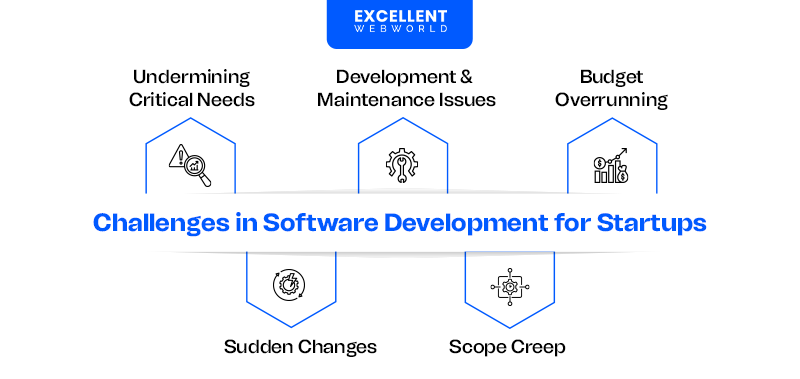
1. Undermining Critical Needs
Many startups rush into development without adequately understanding what they need to build. It often results in wasted resources and products that fail to meet expectations.
Expert Tip: Make thorough plans and research before writing a single line of code. Validate your thoughts with potential customers and create a roadmap that aligns with your enterprise goals.
2. Sudden and Late Changes
Last-minute pivots and feature requests can derail development timelines and morale, especially when using rigid methodologies.
Expert Tip: Embrace the Agile/Scrum model, which anticipates change and builds flexibility into your process. Working with a startup software development company specializing in adaptive methodologies can make these transitions smoother.
3. System Development & Maintenance Issues
Many technical founders overlook critical infrastructure needs like automated testing, deployment pipelines, and future maintenance considerations.
Expert Tip: Implement standard IT solutions, including proper source control and automated testing. A software development consultant can help establish these practices early to prevent technical debt.
4. Scope Creep
The tendency to continuously add features often leads to bloated products that take too long to launch and miss market opportunities.
Expert Tip: Focus on value-driven product development by regularly grooming user stories and prioritizing features based on customer needs. A successful startup product development company uses the MVP approach to launch faster.
5. Budget Overrunning
Financial constraints are incredibly challenging for startups, making accurate budgeting critical to survival.
Expert Tip: Invest time in accurate project scoping and realistic cost estimation. When resources are limited, consider outsourcing software development for specialized components while keeping core development in-house.
Why Partner With Excellent Webworld in Software Development for Startups?
Developing a product in your startup isn’t simply challenging but often overwhelming. From tight budgets and competitive timelines to technical skill gaps and scaling concerns, these pain factors can derail even the most promising ventures.
That’s where an experienced tech partner becomes invaluable. With 13+ years of helping hundreds of startup founders develop market-validated, leading products, Excellent Webworld stands among the top software development companies ready to guide your journey.
Our success stories speak volumes:
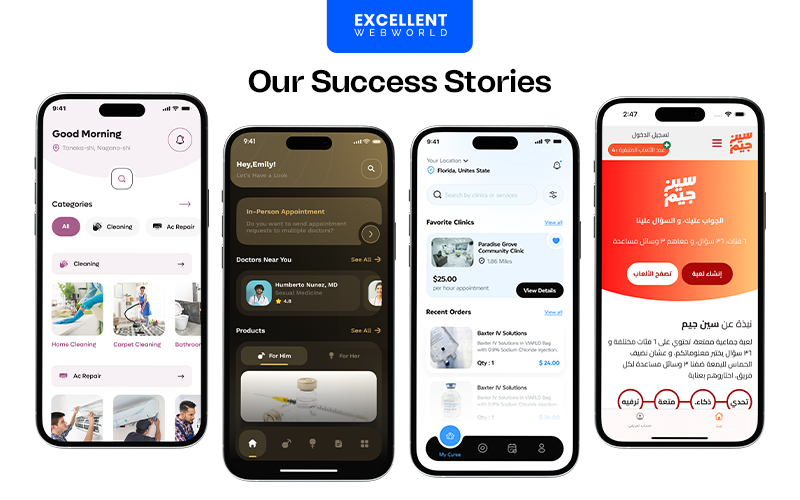
Based on our extensive startup experience, we’ve developed a comprehensive service ecosystem covering everything you need:
| Core Service | Sub-Services |
|---|---|
| Software Development | |
| Specialized Development | |
| Product Development & Prototyping | |
| Consulting & Strategic Advisory | |
| Talent & Resourcing Models | |
| Experience & Interface Design | |
| Growth & Marketing Enablement |
Don’t want to get into the hassle of picking the right tech for your startup? Schedule your free consultation today and discover how our battle-tested expertise can accelerate your journey from concept to competitive advantage.

Article By


Mayur Panchal is the CTO of Excellent Webworld. With his skills and expertise, He stays updated with industry trends and utilizes his technical expertise to address problems faced by entrepreneurs and startup owners.